
![grafika z tekstem [journeys to the east]](https://www.muzeumazji.pl/maip/uploads/2022/08/baner_strona_english_tn-1140x220.jpg)

Object of the Month – June 2026
A statue of the Fifth Dalai Lama
Altar statue – Fifth Dalai Lama Ngawang Lobsang Gyatso
Tibet, mid-19th century
fired and polychrome clay
Height 15.5 cm, Width 13.8 cm, Depth 10.6 cm
MAP 6256
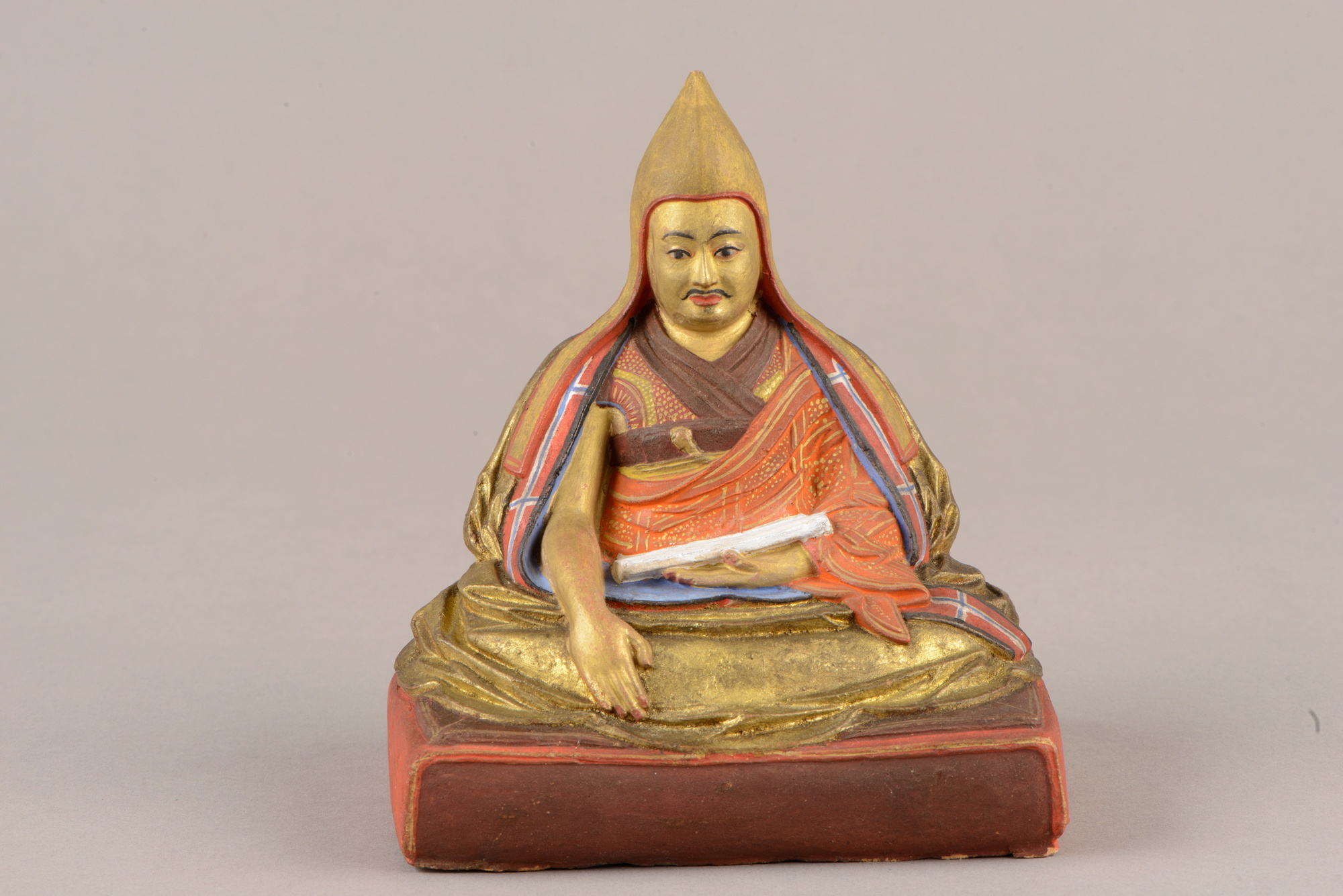
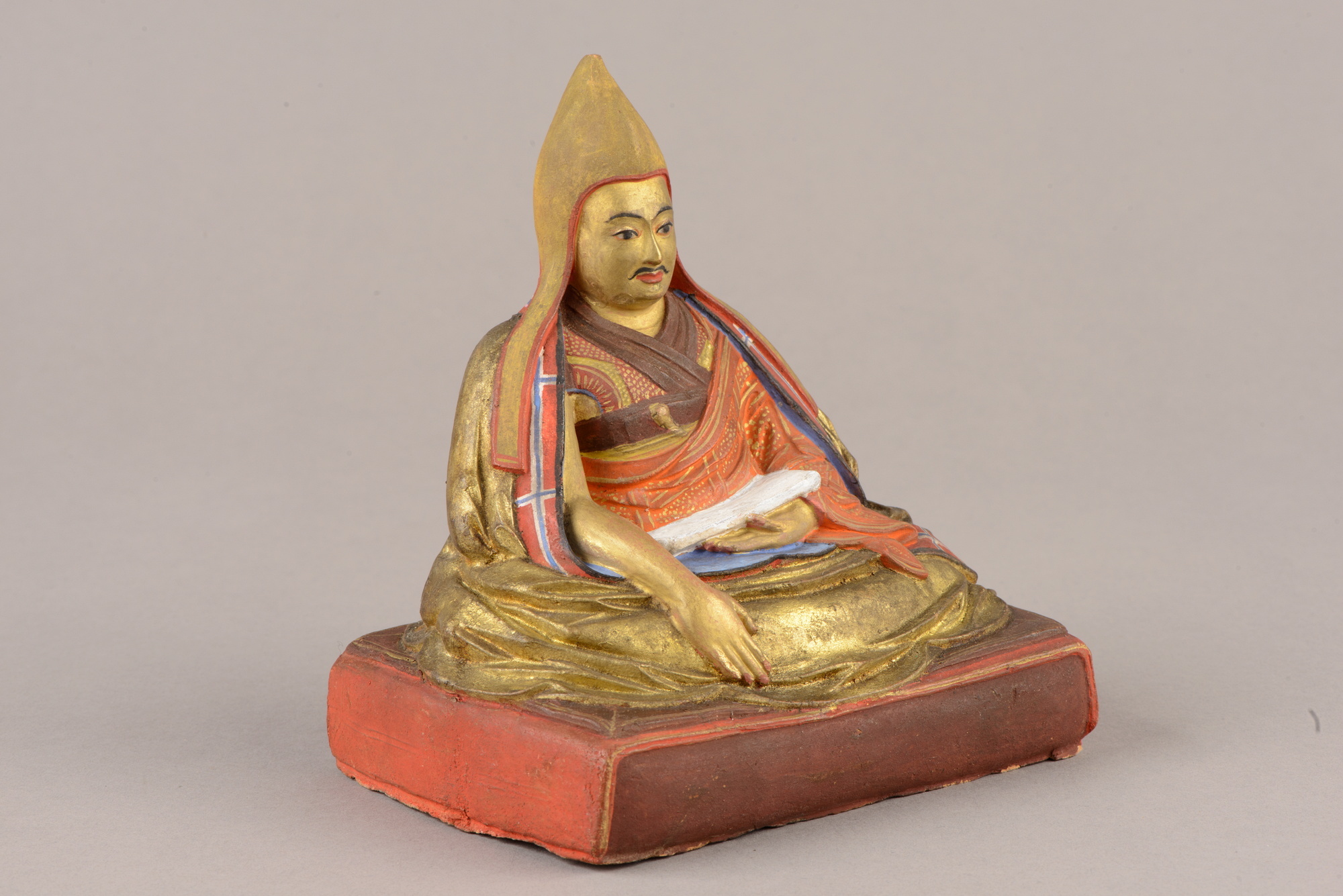
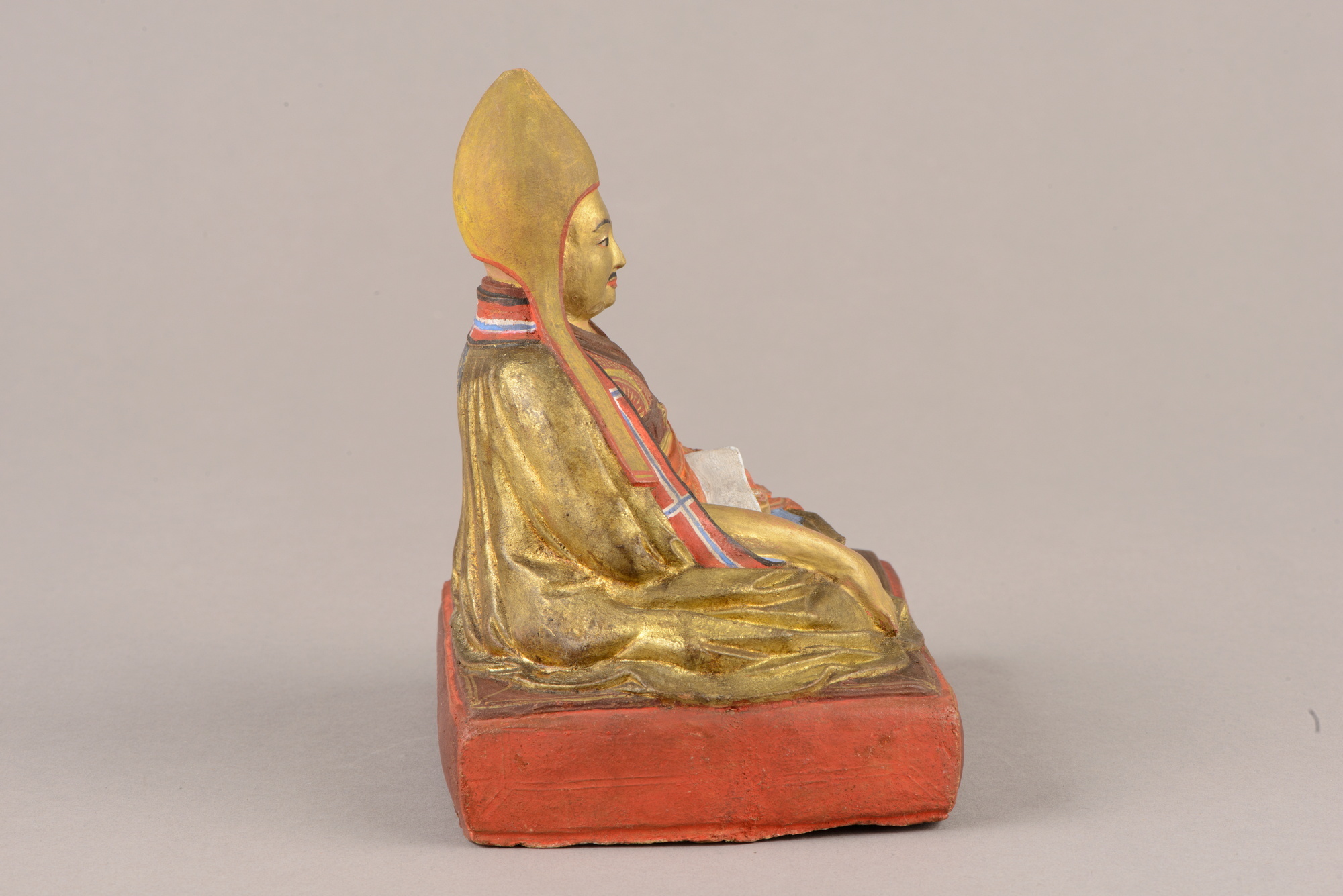
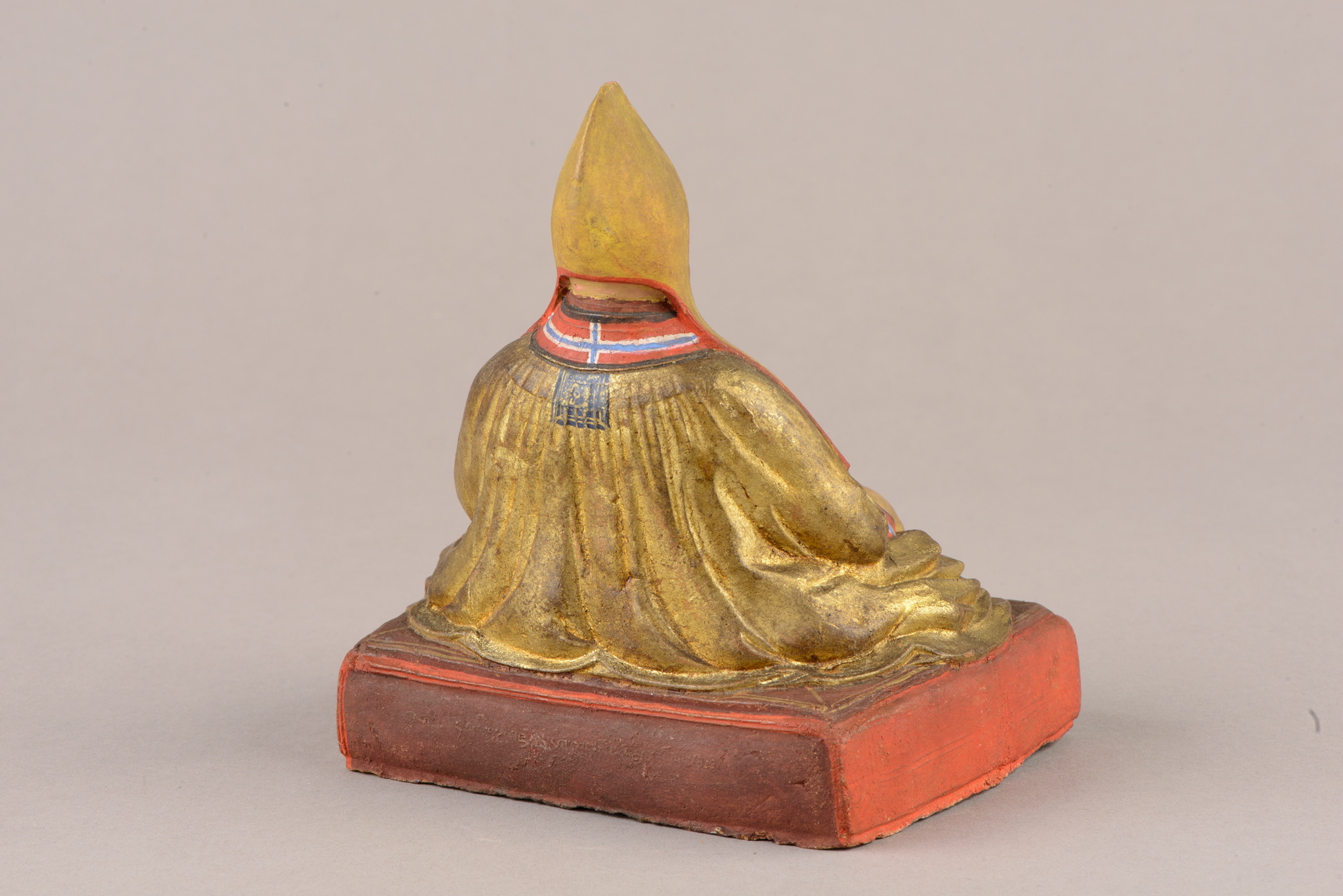
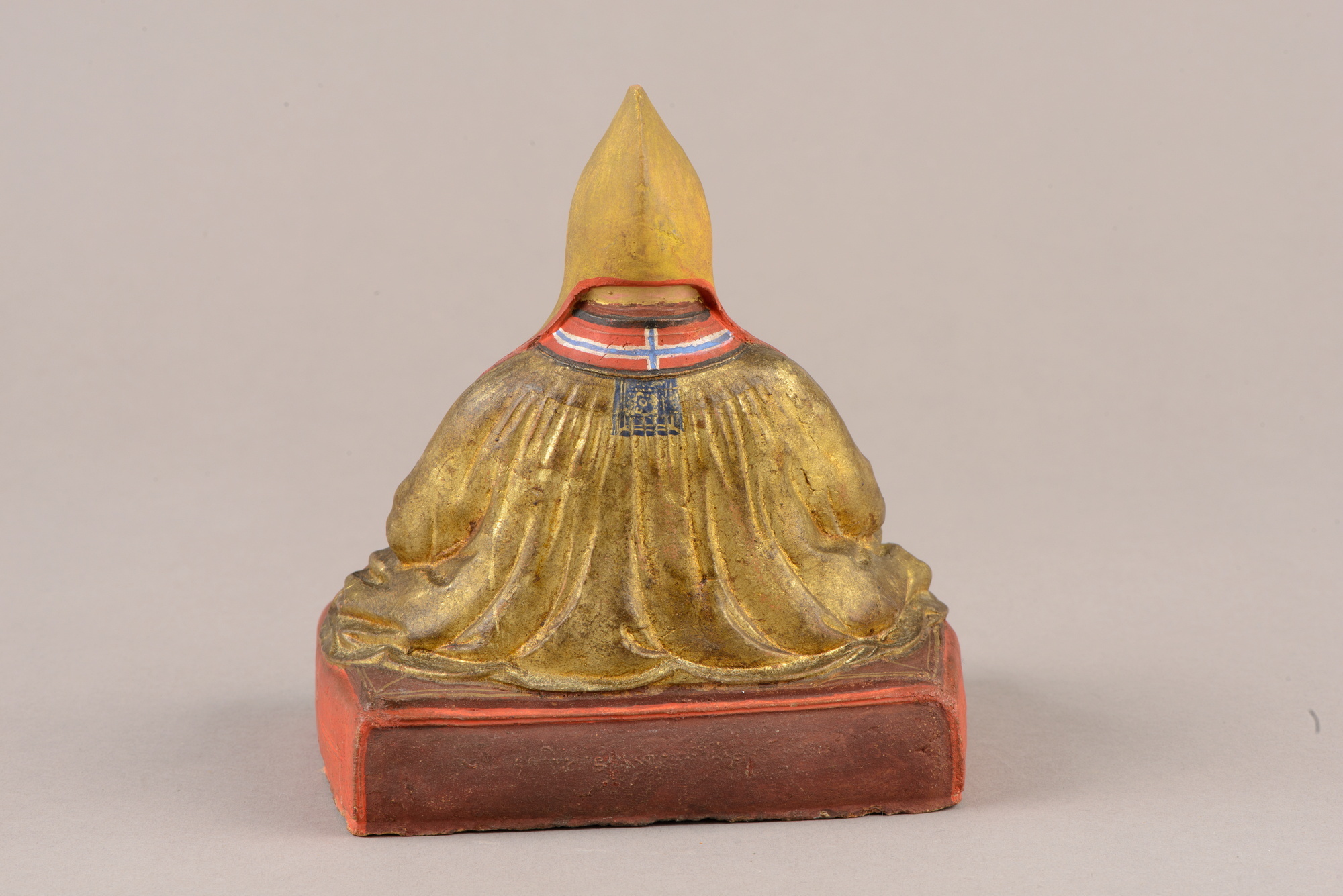
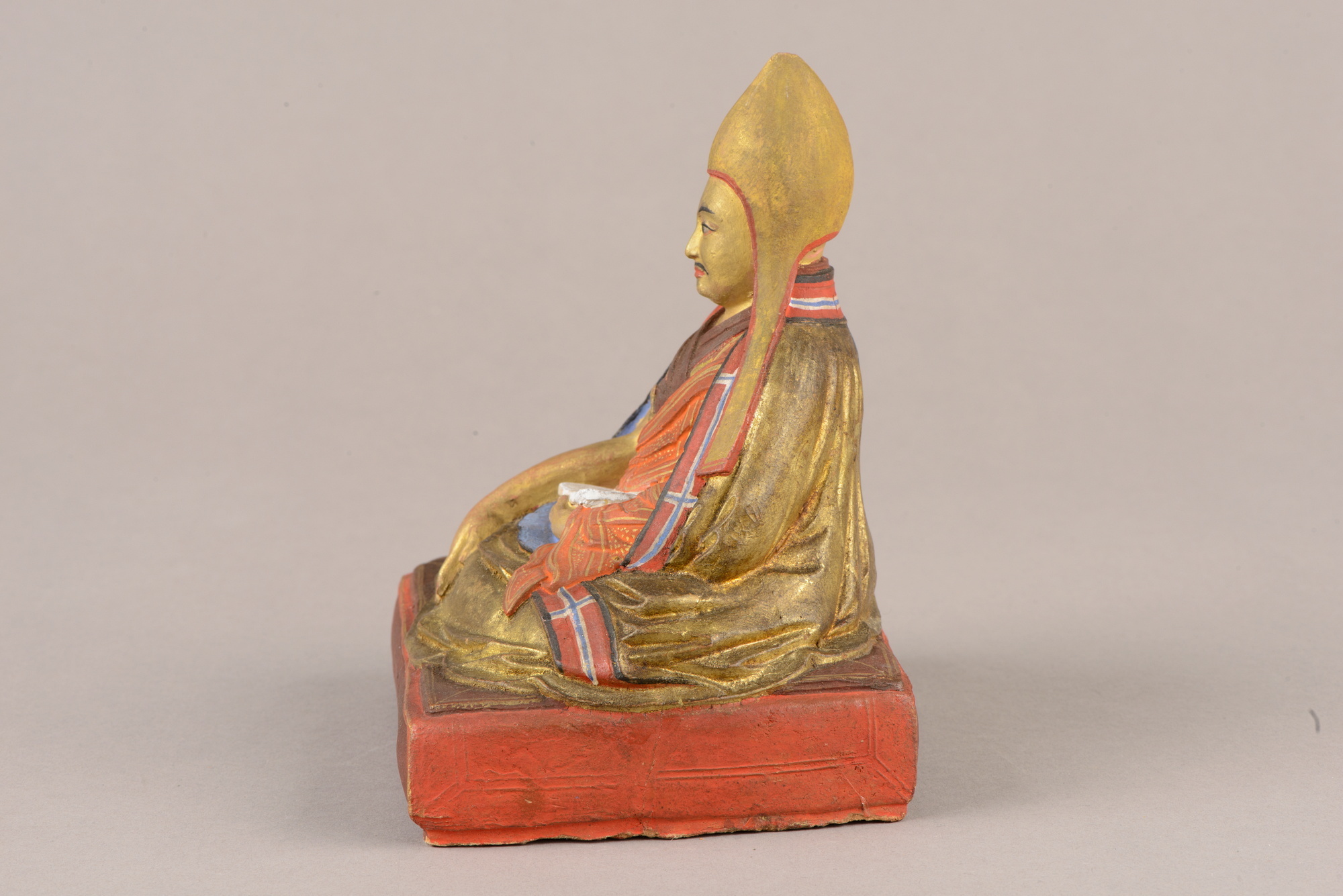
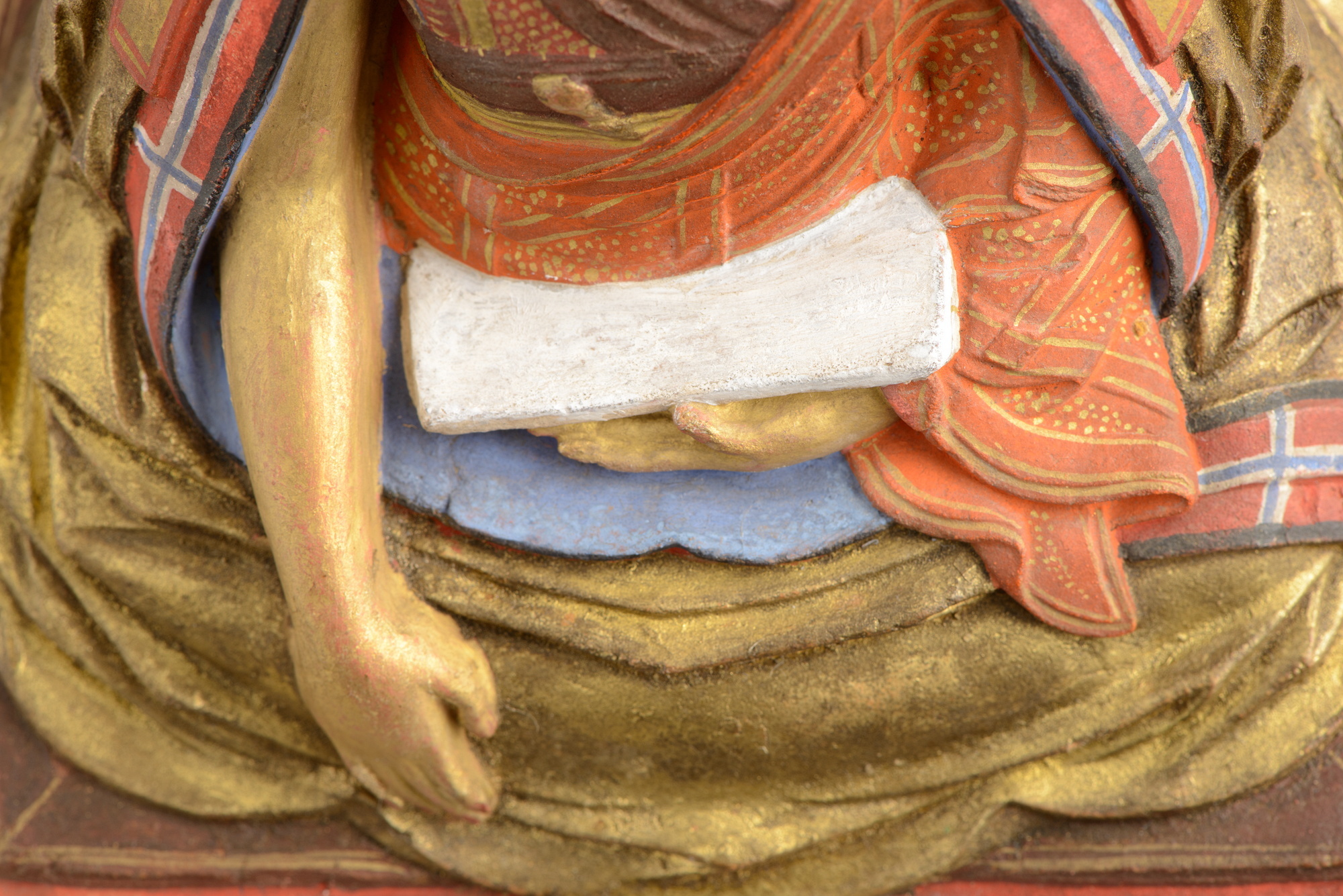
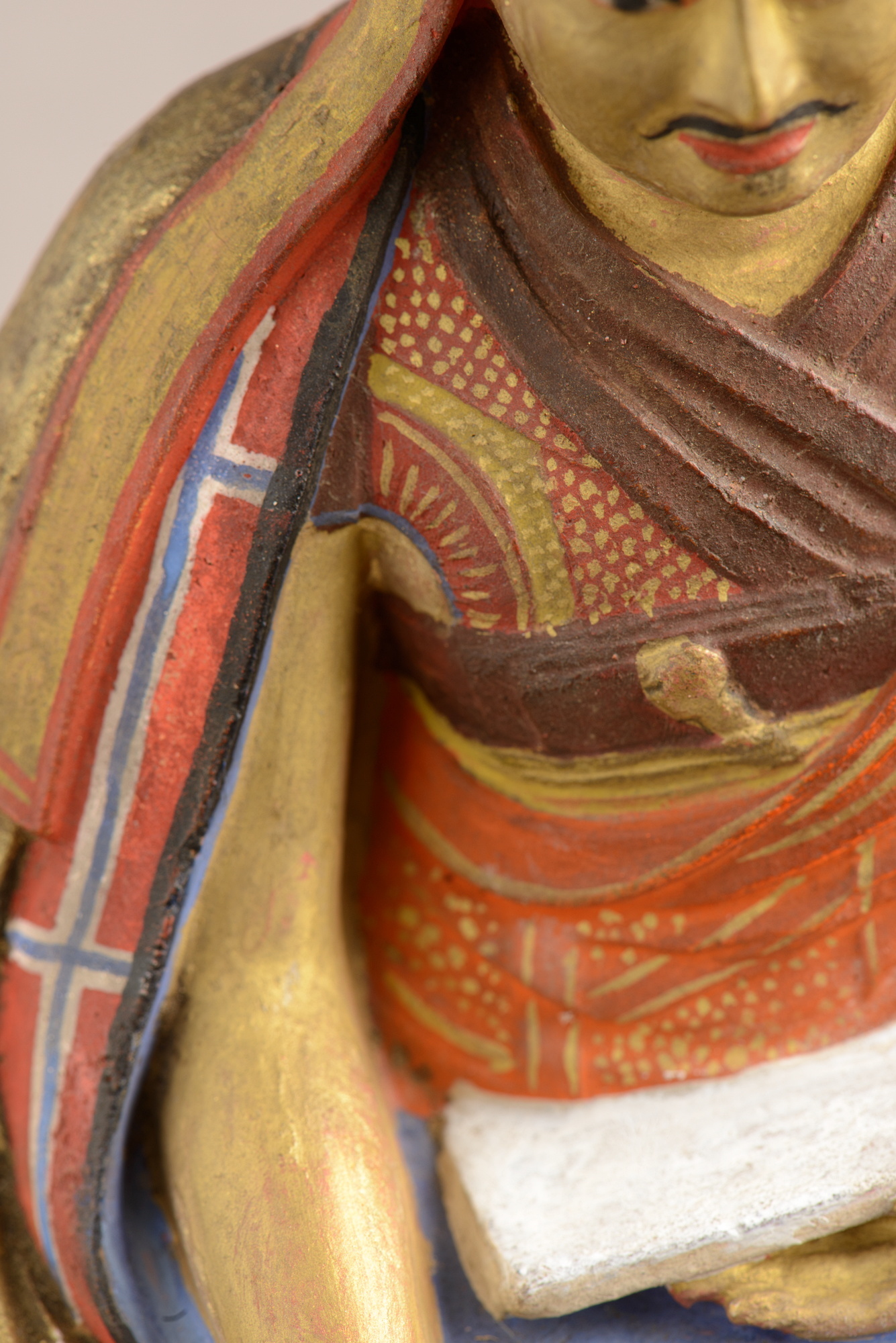
A rare religious portrait statuette from the Vajrayana Buddhist tradition (also known as Tibetan Buddhism) made of clay. Portraits of people are a secondary theme in Tibetan Buddhist art compared to images of deities; the exception are generally images of important lamas (clergy), including the depiction of the Fifth Dalai Lama (1617-1682). The item is also rare because this highest-ranking Tibetan cleric was usually depicted in statuettes made of metal (bronze or copper) or in scroll paintings painted with tempera on canvas – thangkas (Tib. thang-ka).
The Fifth Dalai Lama, titled the Great (Ngawang), was named Lobsang Gyatso. He came from central Tibet. He was the first of the Dalai Lamas to exercise both spiritual and secular authority over Tibet – that is, he was the first religious monk-king of Tibet. This came about as a result of a fierce rivalry with the secular regent of Tsang Province, one of the two main regions of the country (Tsang is located in southern Tibet). The regent intended to defeat and destroy the Gelug Order, to which the Dalai Lamas belong. The Dalai Lama was militarily aided in the fight by Gushri Khan, the powerful ruler of the Khoshuts, one of the Western Mongolian peoples. After his victory, he proclaimed Lobsang Gyatso the spiritual and temporal ruler of Tibet in 1642. In 1645, Lobsang Gyatso began construction of the Dalai Lamas’ palace, known as the Potala, in Lhasa, the capital of Tibet. This palace, combining the ruler’s residence with a Buddhist temple and monastery (now being the most important monument in the country) took many years to build. Construction was completed by Sangye Gyatso, regent after the Fifth Dalai Lama, who concealed his death for years.
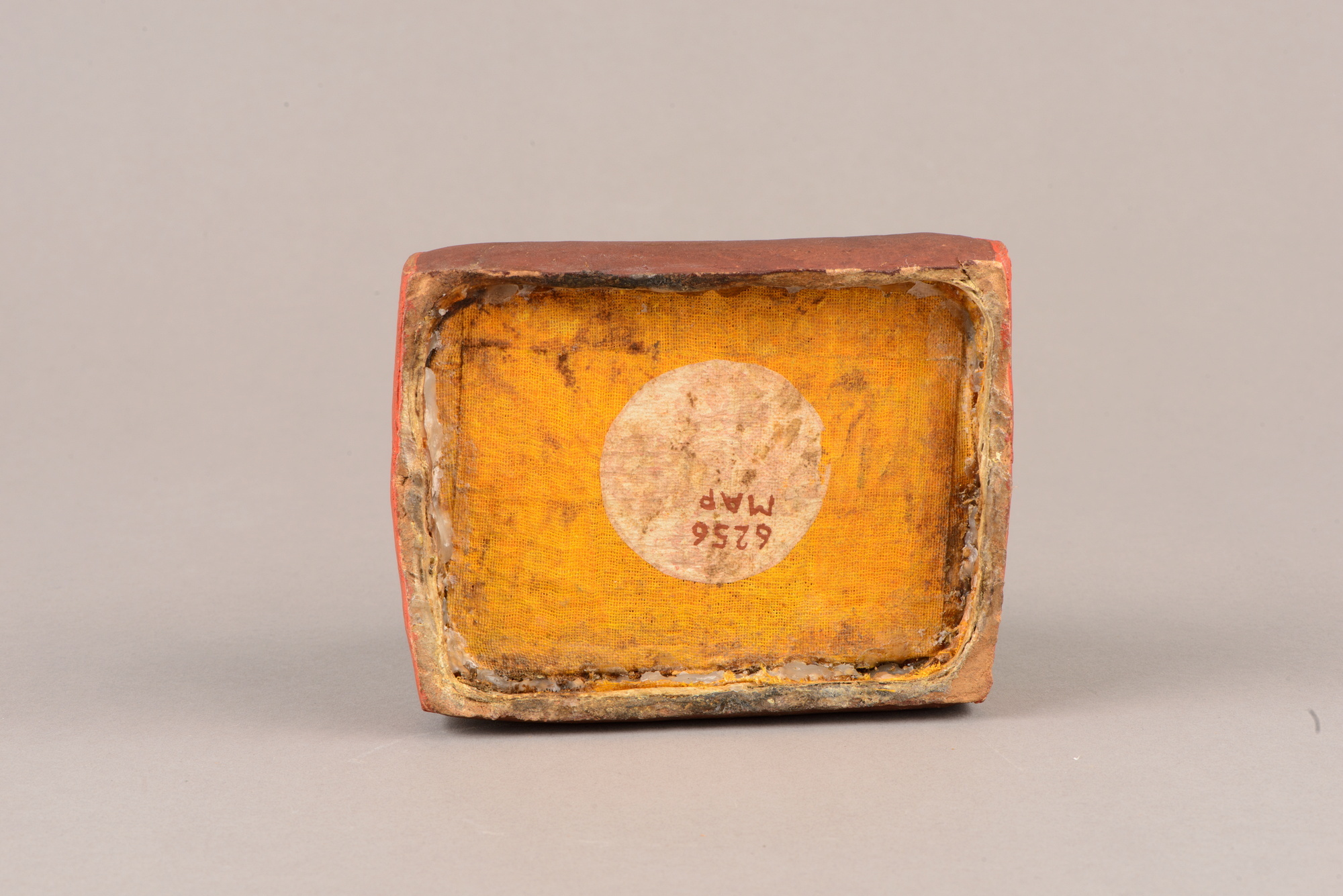
The Dalai Lama sits on a rectangular throne composed of a single brown cushion with vermilion sides. A faint inscription in Tibetan script is embossed on the back. The Dalai Lama is distinguished by his massive build. He wears a large, multi-folded outer robe dagam , open at the front to reveal the lama’s (cleric’s) sleeveless vest, Zand an orange robe with gold ornamentation, draped over his left shoulder. On his head is the cap of a Buddhist Gelug order scholar ( pandita ), yellow, pointed, with long earflaps. A gold ritual dagger (Tib. phurbu )— his attribute in art—is tucked into his belt. In his left hand, he holds an elongated sacred book with white pages; with his right, he touches the ground, repeating the gesture of the historical Buddha Shakyamuni: the gesture of affirming enlightenment (calling the earth to witness enlightenment (Skt. bhumisparśa ). His face is concentrated, with open, unblinking eyes, and he has a mustache. The face and hands are painted in a matte gold, a color used to paint statues of Buddhas and lamas. The statuette is closed at the bottom with a wooden base, covered with orange canvas dipped in wax.
Tibetan language consultation: Zuzanna Jakóbowska, the Asia and Pacific Museum
Photo: Łukasz Brodowicz, the Asia and Pacific Museum